


5 cm Fibroid: Causes, Symptoms, and Treatment

 American Fibroid Centers
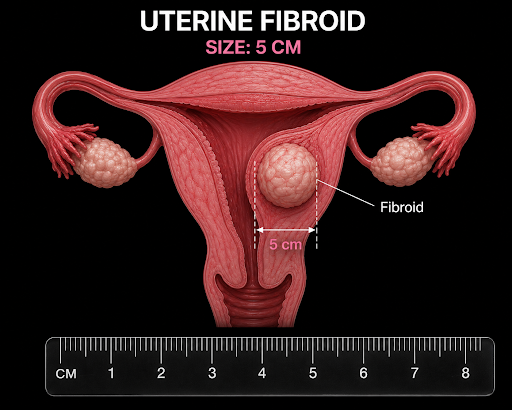
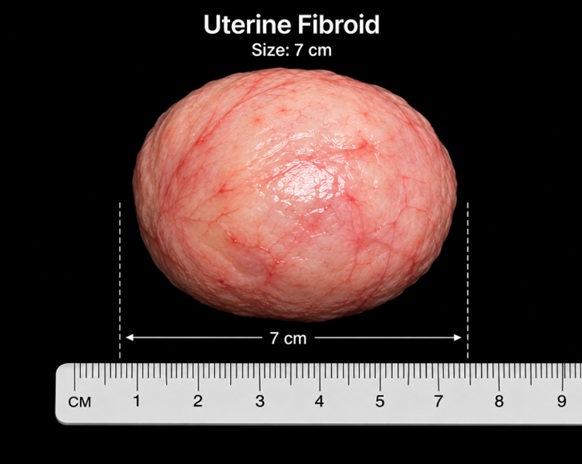
Finding out you have a 5 cm fibroid in your uterus can feel unsettling, especially when you’re not sure what that size means for your reproductive health. The truth is that fibroids are common, and many women live with them for years, sometimes without realizing they have one. At 5 cm, a fibroid has typically grown large enough to change the shape or feel of the uterus and to press against nearby structures like the bladder. It’s roughly the size of a medium-sized lime or plum.
That doesn’t mean treatment is automatically necessary; it simply means this is a size where doctors tend to pay closer attention and start weighing whether monitoring or active treatment makes more sense for you. This guide explains what a 5 cm uterine fibroid is, how it may impact your health, and the treatment options available to help you feel like yourself again.
What Is a 5 cm Fibroid in the Uterus?
A fibroid, medically known as a leiomyoma or myoma, is a benign tumor that forms from the muscle tissue of the uterine wall. These growths are extremely common. Research suggests up to 70–80% of women will develop at least one by age 50, and most form or enlarge during the reproductive years, when circulating estrogen is at its highest.
It’s tempting to treat fibroid size as a straightforward severity scale, but that’s not how fibroids actually work. A measurement in centimeters says nothing about where the fibroid sits, how many are present, or how close it is to sensitive structures, and those factors matter more than size alone.

Where Can a 5 cm Fibroid Be Located?
A fibroid’s location is just as important as its size when it comes to predicting symptoms and choosing treatment. Fibroids are classified by type based on where they grow in relation to the uterine wall:
- Submucosal fibroids develop just beneath the lining of the uterine cavity. Even at 5 cm, these tend to cause the heaviest bleeding and are most likely to interfere with fertility.
- Intramural fibroids grow within the muscular wall of the uterus. This is the most common location, and at 5 cm, these fibroids often cause the uterus to feel enlarged and can press on the bladder or bowel.
- Subserosal fibroids form on the outer surface of the uterus. At this size, they’re more likely to cause pressure symptoms, such as bloating or back pain, than heavy bleeding.
- Pedunculated fibroids grow on a stalk, either inside or outside the uterus. A 5 cm pedunculated fibroid can occasionally twist on its stalk, causing sudden, sharp pain.
Because location has such a strong influence on how a fibroid causes symptoms, two women with the same 5 cm measurement can have very different day-to-day experiences. A 3 cm submucosal fibroid pressing directly into the uterine cavity can trigger heavy bleeding and fertility problems, while a 5 cm subserosal fibroid growing outward, away from the uterine cavity, might cause barely any symptoms. This is why your care team looks at the full picture: size, type, location, and your personal symptoms, rather than basing a treatment plan on measurement alone.
Signs and Symptoms of a 5 cm Fibroid
The symptoms you experience often depend on the fibroid’s size, location, and number. For instance, fibroids near the uterine lining tend to cause heavier bleeding, while those pressing on nearby organs may create pressure or pain.
Understanding these common signs can help you recognize when fibroids might be affecting your health. While some women may not experience symptoms, many women with 5 cm fibroids report one or more of the following:
- Heavy or prolonged periods, sometimes with clotting
- Pelvic pressure or aching
- Bloating or a feeling of fullness in the abdomen
- Needing to urinate more often or trouble fully emptying the bladder
- Lower back pain
- Discomfort during intercourse
Is a 5 cm Fibroid Dangerous?
The overwhelming majority of fibroids are noncancerous, and having one at 5 cm isn’t a medical emergency on its own. Still, fibroids of this size are large enough to sometimes lead to real complications, including:
- Anemia from ongoing heavy bleeding
- Bladder or bowel symptoms caused by pressure
- Persistent pelvic pain
- Pregnancy complications, including miscarriage or preterm labor
Occasionally, a fibroid that’s growing quickly needs additional imaging to make sure nothing else is going on. That’s why ongoing check-ins with your doctor matter, even if your fibroid isn’t currently bothering you.
How are 5 cm Fibroids Diagnosed?
A few different tools help your care team confirm the presence, size, and location of a fibroid:
- Pelvic exam: your doctor may be able to feel an enlarged or irregularly shaped uterus by hand.
- Ultrasound: the standard first imaging test and often the fastest way to size and locate a fibroid. A transvaginal ultrasound typically gives a sharper picture than an abdominal one.
- MRI: used when a more detailed map of the uterus is needed, particularly to plan a procedure.
- Hysteroscopy or sonohysterography: your provider examines the inside of the uterine cavity directly, which is especially useful when bleeding is the main concern.
Together, these tests help your doctor connect your symptoms to the fibroid (or fibroids) causing them and map out which treatment path fits best.
Treatment Options for a 5 cm Fibroid
Treatment for a 5 cm fibroid depends on your symptoms, age, whether you hope to have children, and your overall health.
Monitoring Without Treatment
If a fibroid isn’t causing meaningful symptoms, your doctor may suggest simply keeping an eye on it with periodic exams or ultrasounds. Many fibroids stabilize or shrink on their own after menopause, as estrogen levels fall.
Medication
Medication won’t eliminate a fibroid, but it can make day-to-day symptoms more manageable:
- Hormonal birth control (pills, the patch, or an IUD) can lighten heavy bleeding.
- GnRH agonists lower estrogen levels, which can shrink fibroids temporarily.
- NSAIDs or tranexamic acid can ease pain and reduce blood loss during periods.
Myomectomy
A myomectomy is a surgery that removes the fibroid(s) while leaving the uterus in place. It can be done hysteroscopically, laparoscopically, or through open surgery, depending on the fibroid’s size and position. It generally involves a longer recovery than UFE and a greater risk of recurrence.
Hysterectomy
A hysterectomy is the removal of the uterus entirely. It permanently resolves fibroids but also ends fertility, so it’s usually reserved for severe symptoms or for women who aren’t planning to have children in the future.
Uterine Fibroid Embolization (UFE)
UFE is a minimally invasive procedure that cuts off the fibroid’s blood supply so it shrinks over time:
- Performed by an interventional radiologist, not a surgeon.
- No large incision, general anesthesia, or overnight hospital stay.
- Most patients resume normal activities within about a week.
- Leaves the uterus intact, which still allows women the chance to conceive
Because UFE works well across a broad range of fibroid sizes, it’s a strong candidate for a fibroid around 5 cm specifically.
Why Choose Uterine Fibroid Embolization?
American Fibroid Centers specializes in UFE, which offers many benefits for women with symptomatic 5 cm fibroids. UFE is a gentle, image-guided treatment that blocks blood flow to fibroids, causing them to shrink and symptoms to improve. Many women experience significant relief from heavy menstrual bleeding, pelvic pain, and pressure after UFE. Unlike traditional surgery, UFE doesn’t require general anesthesia or a hospital stay, leaves no scars, and has a much shorter recovery time, often allowing patients to return to their normal activities within 7 to 10 days.

When It’s Time to Talk to a Fibroid Specialist
Consider reaching out to a fibroid specialist if you’re dealing with:
- Periods that are heavier or longer than they used to be
- Pelvic pain that’s starting to interfere with your routine
- Persistent bloating, urinary changes, or constipation
- Difficulty conceiving or carrying a pregnancy to term
Symptoms tend to be easier to manage the earlier they’re addressed, so there’s little upside to waiting until things get worse.
Schedule an Appointment for Fibroid Treatment in New York City
If you’ve recently learned you have a 5 cm fibroid, or you’re dealing with heavy bleeding, pelvic pain, or pressure and suspect one might be the cause, it’s worth understanding your options sooner rather than later. American Fibroid Centers’ affiliated New York City locations offer image-guided, minimally invasive treatments, including UFE, delivered by experienced interventional radiologists. Schedule an appointment today to find out what relief could look like for you.
Related Blogs & Videos



Schedule an appointment at your nearest American Fibroid affiliated center.